.png)
How Does Happy Letters Teach?
Laying the foundation
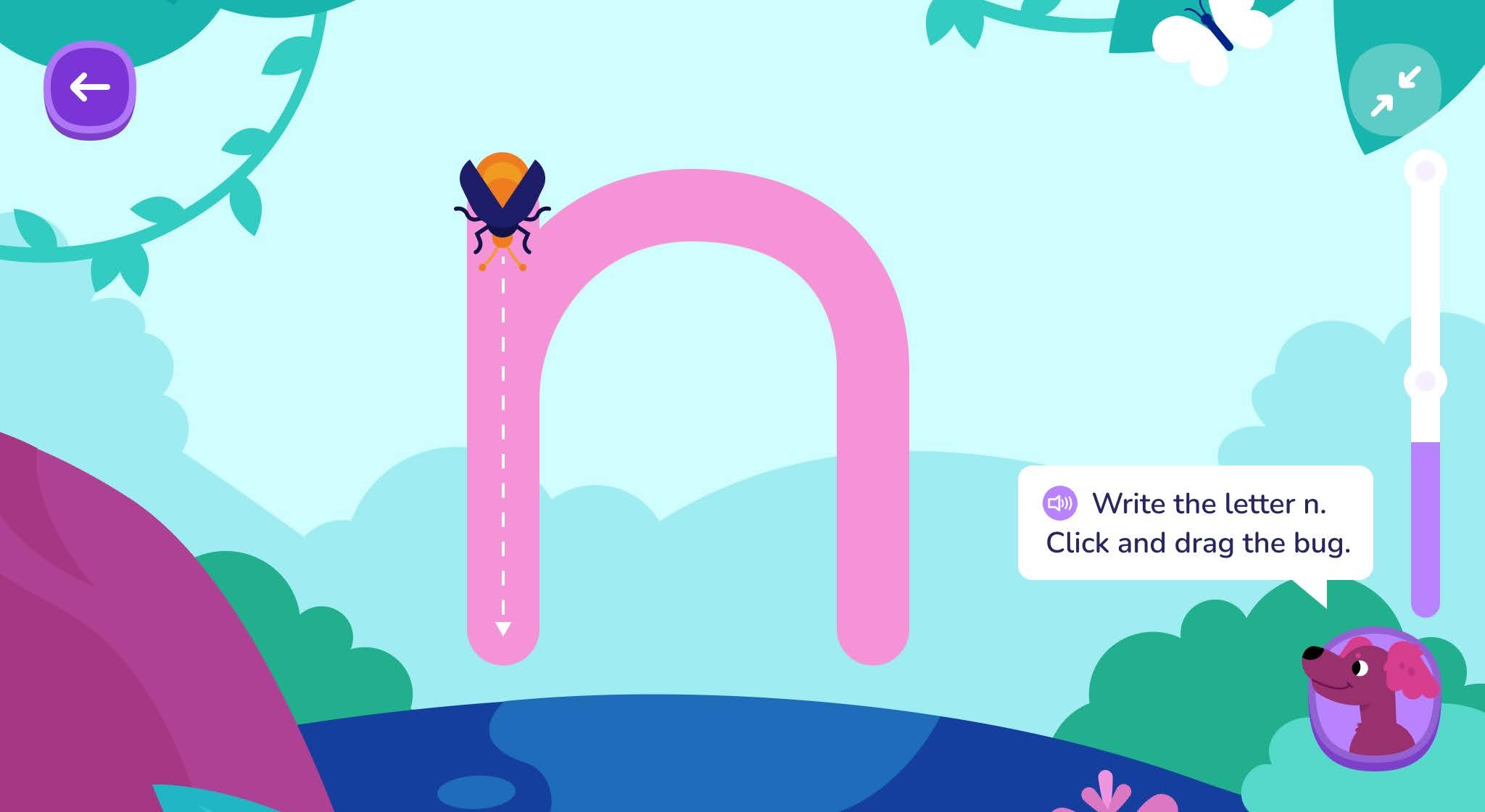
In Kindergarten, students lay the groundwork in ELA by mastering letters and sounds. They’re guided through letter recognition and formation, as well as sound identification and production, and eventually begin applying this new letter-sound correspondence to words.
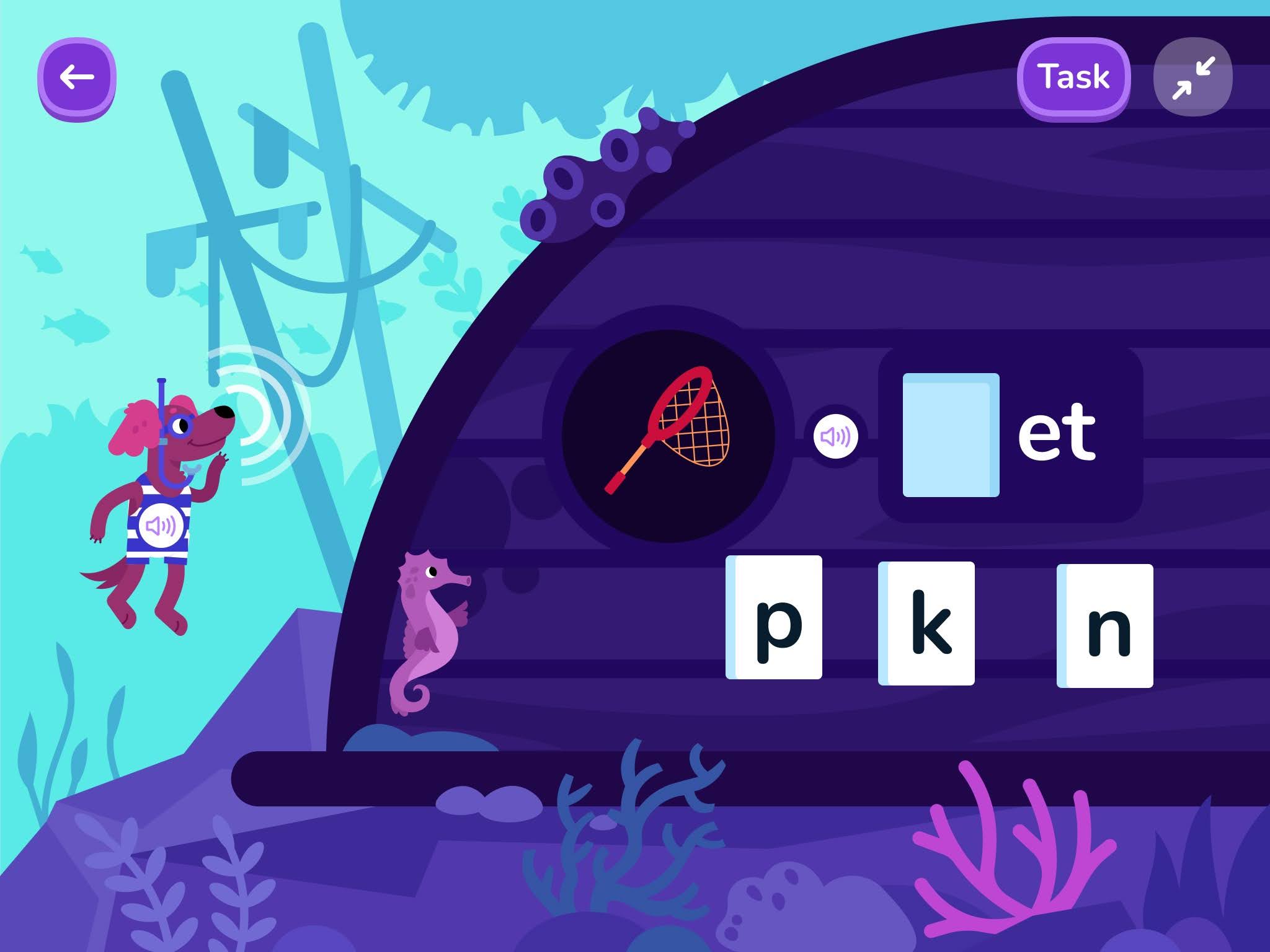
Phonemic awareness is a key part of phonological development. The Happy Letters learning pathway includes exercises that build phonemic awareness — isolating, blending, segmenting, adding, and substituting sounds — all important precursors to decoding words in later grades.
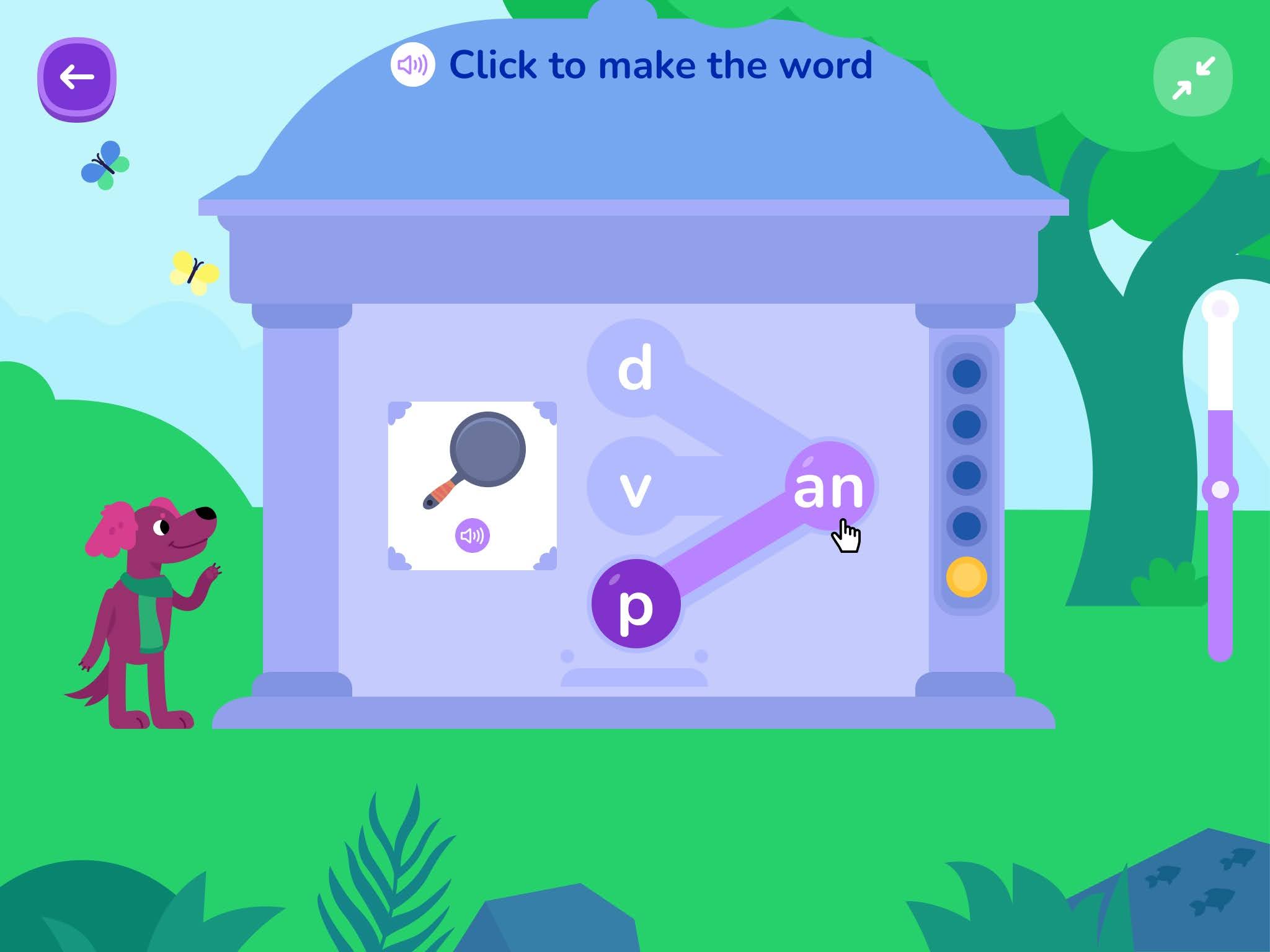
The program was designed to help learners start reading as soon as possible: we guide early readers through blending the onset (the initial sound) and the rime (the ending pattern) to create CVC words. Soon, students can actively form and manipulate their first simple words!
Decoding and Word Recognition
As students move to later stages in Happy Letters, continued exposure to phonics helps them strengthen their decoding skills and develop automatic word recognition.
In Grade 1, students continue to strengthen phonemic awareness while focusing on more advanced phonics patterns, such as digraphs, consonant blends, vowel teams, and silent e.
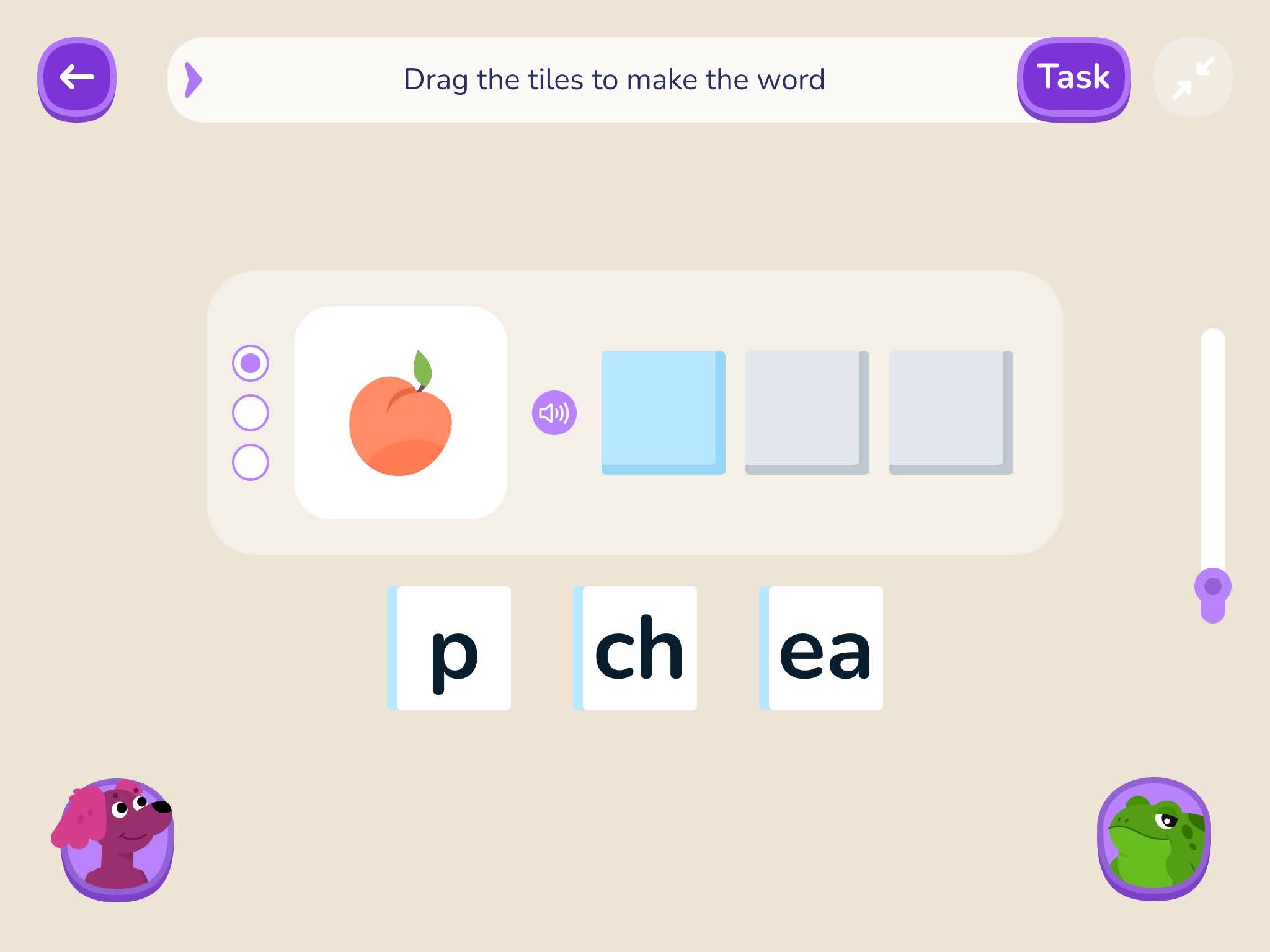
In Grade 2, students expand their knowledge by learning additional vowel teams and spelling–sound correspondences. In each lesson, early readers work with words in a structured way—segmenting sounds and decoding words step by step. This consistent practice helps them build strong word recognition skills over time and teaches them exactly what to do when they encounter an unfamiliar word.
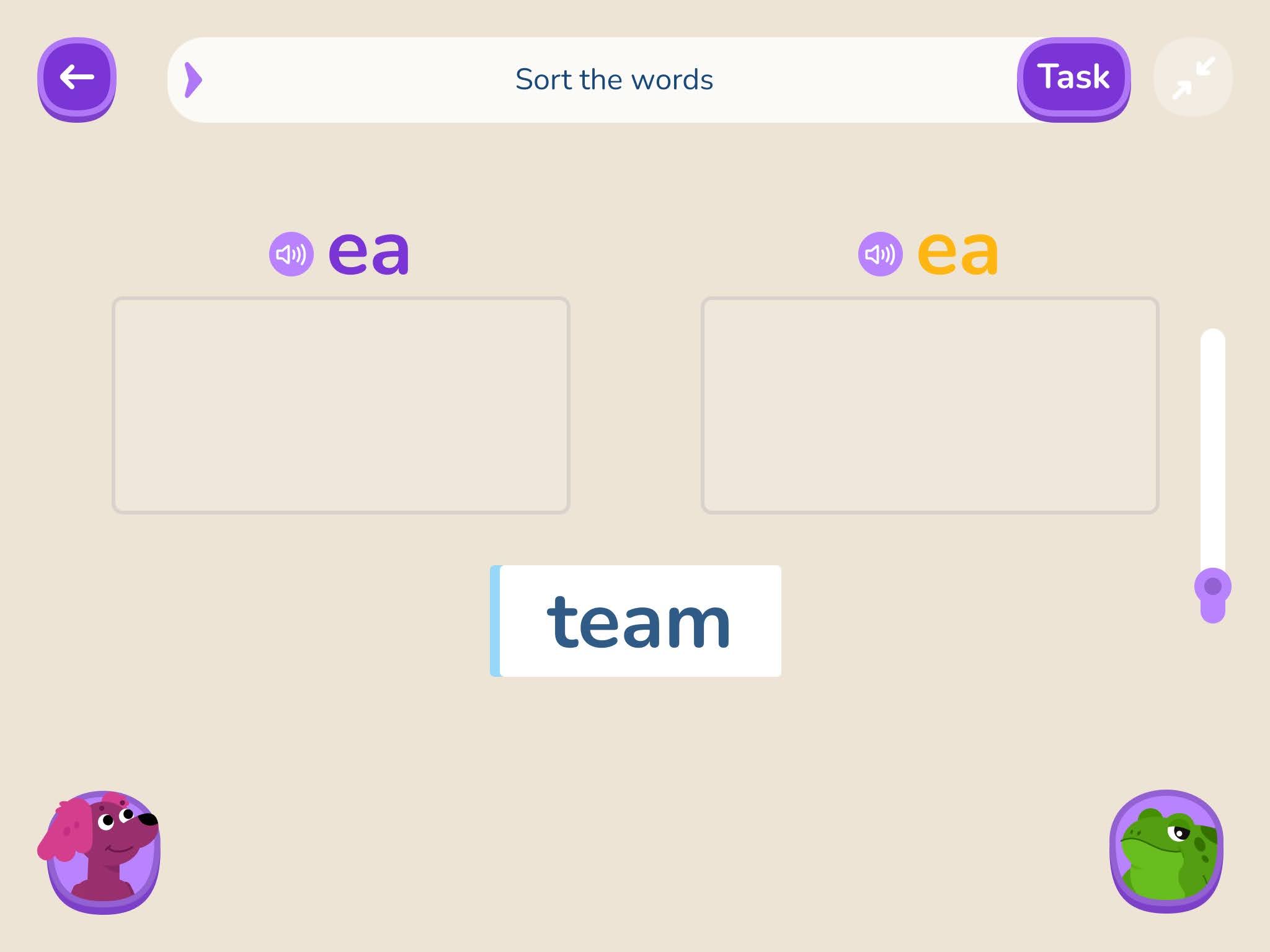
Through repeated practice with decoding, students begin to store words in memory by forming connections between sounds, letters, and meaning (a process known as orthographic mapping). This allows them to recognize words automatically and read with fluency.
Reading Fluency and Comprehension
As students develop their blending and decoding skills, they begin to recognize words more quickly and read with greater accuracy and ease.
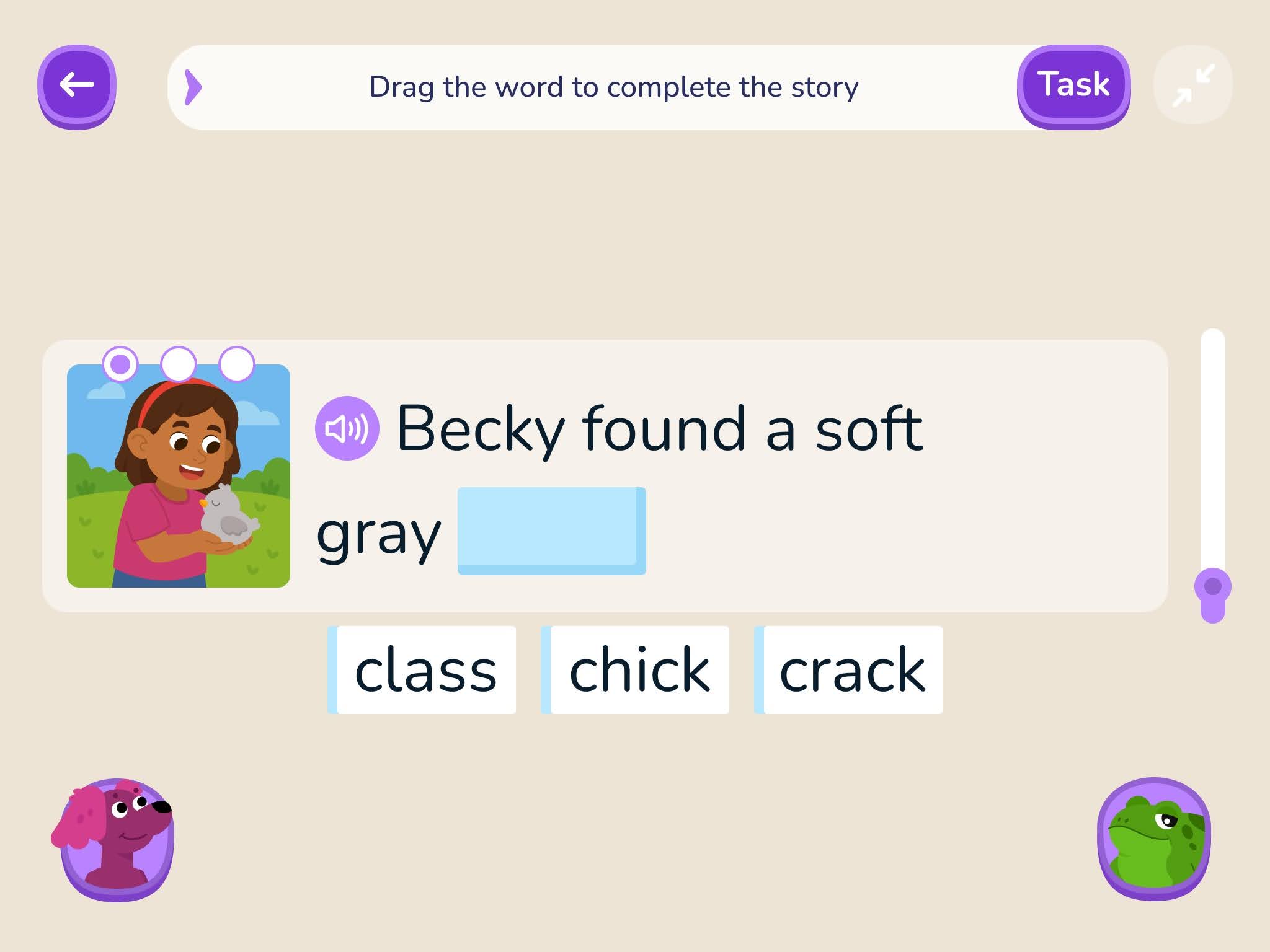
In Grade 1, students apply their decoding skills to read words in meaningful contexts, such as simple stories, which helps them connect pronunciation to meaning. This supports vocabulary development and consolidates word recognition.
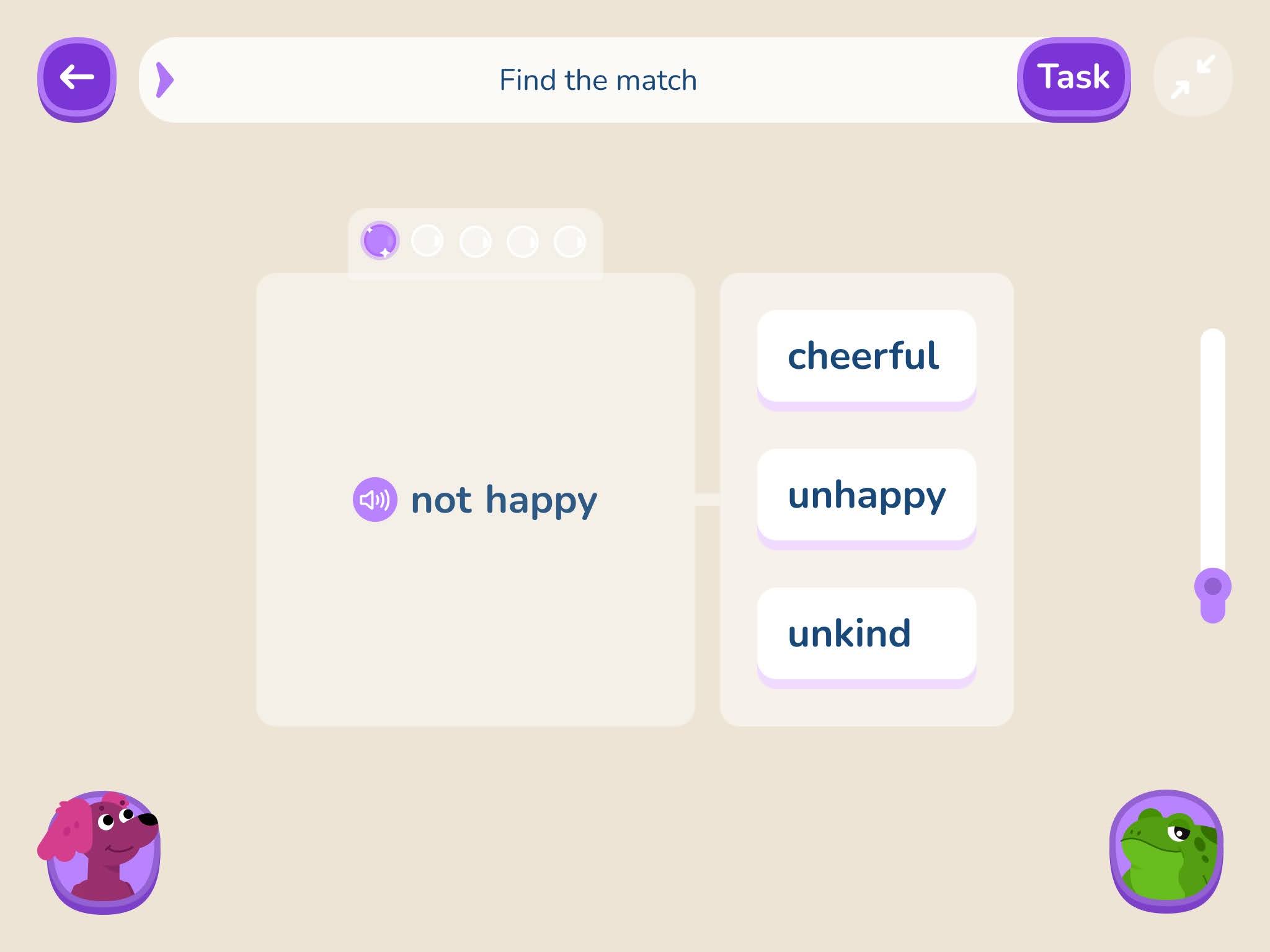
In Grade 2, students deepen their understanding of word structure by working with common prefixes, suffixes, and more complex spelling patterns.
As they read short passages, students focus not only on accuracy but also on meaning: building vocabulary, making connections within and across sentences, and answering simple comprehension questions.
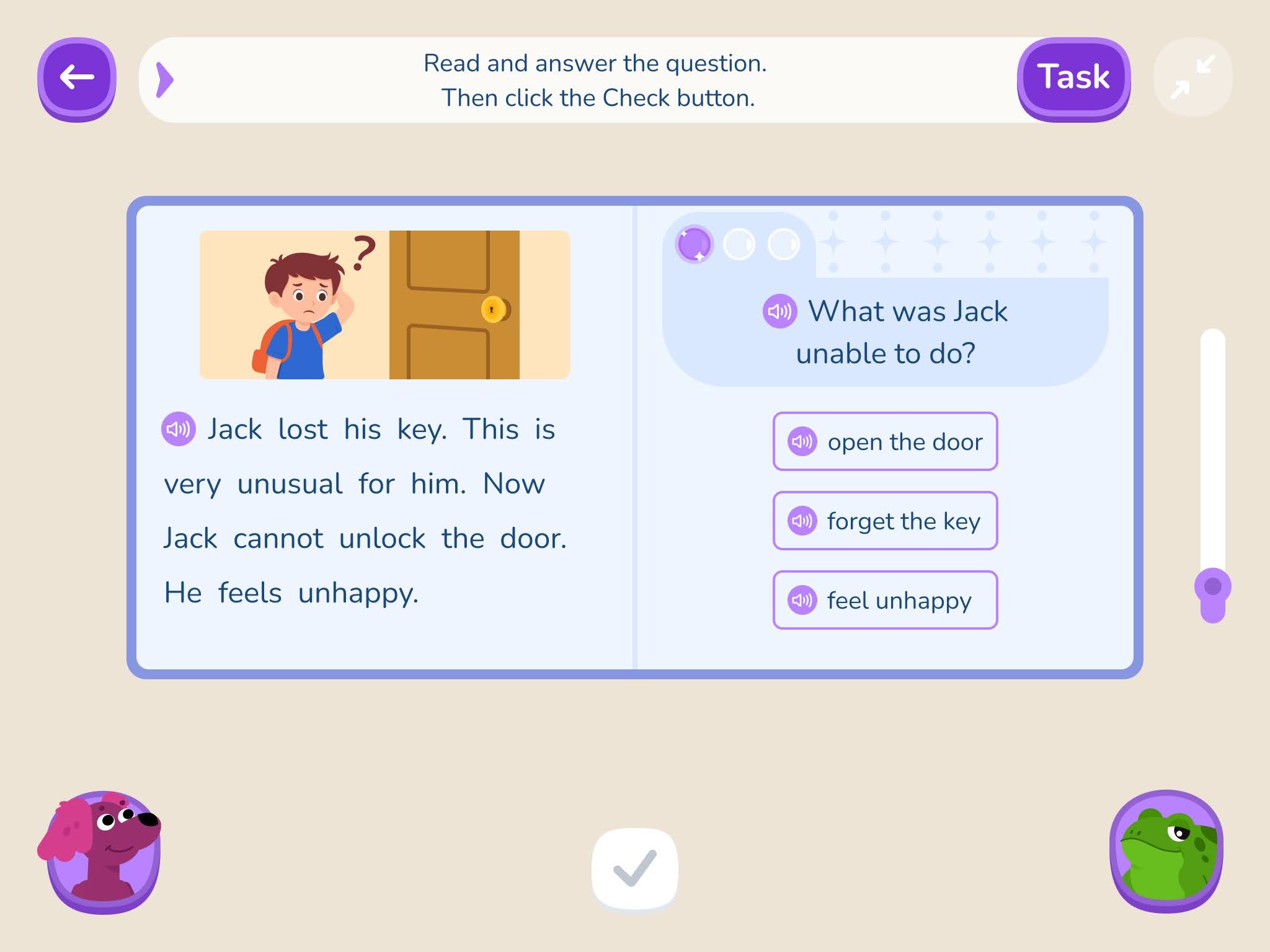
As students encounter words in different contexts, they strengthen their understanding of how words are formed and used, making them more fluent and confident readers.
Review and Skill Reinforcement
Successful reading development requires more than clear instruction of new concepts. In each grade, students regularly revisit previously learned skills through cumulative and varied practice, helping them retain what they already know and apply it to new contexts.
As the cognitive load increases, game-like elements keep students motivated and focused.
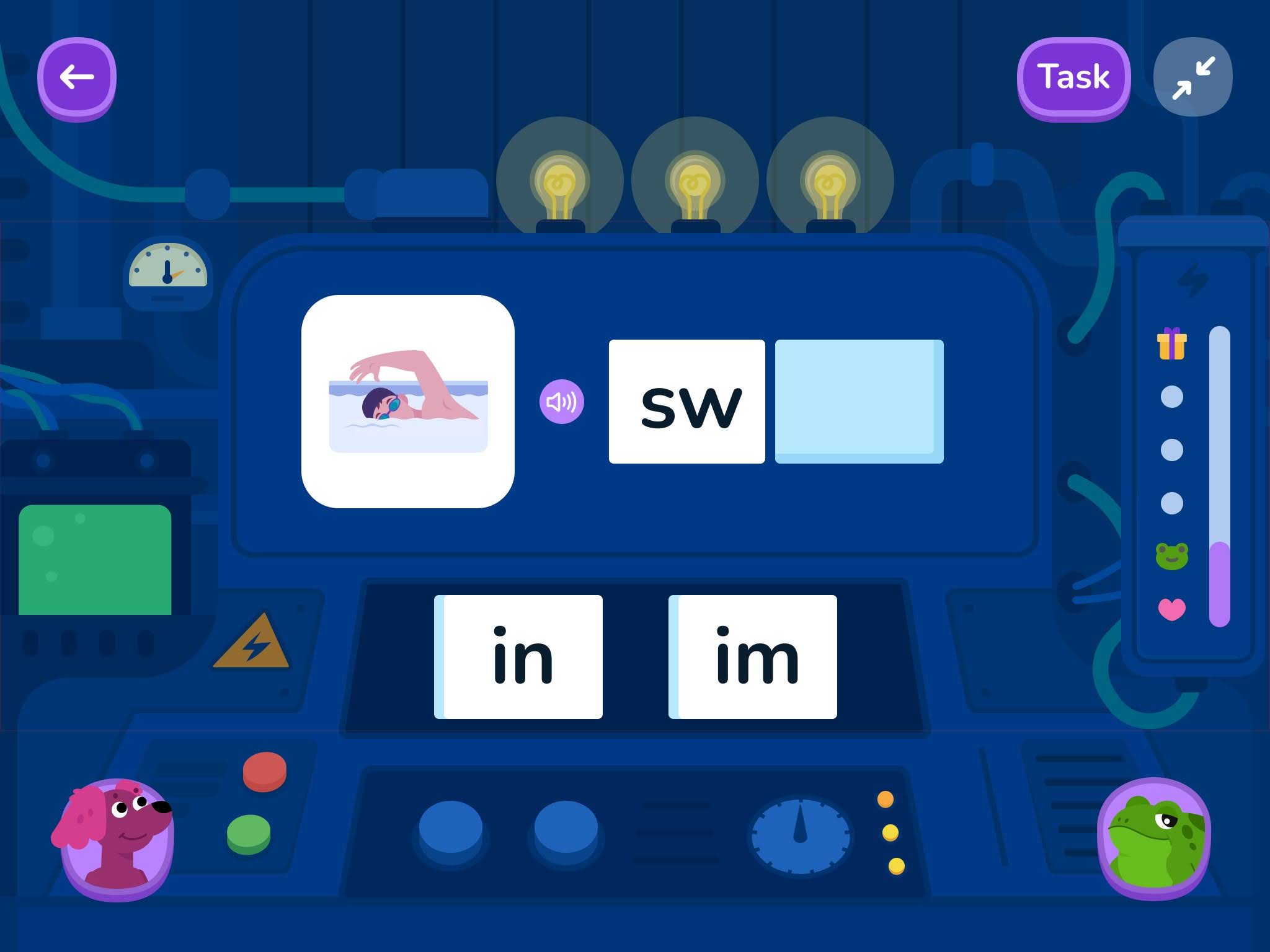
By encountering familiar patterns in new words and learning games, they strengthen connections between sounds and spelling, supporting long-term retention and automatic word recognition.
Student Autonomy
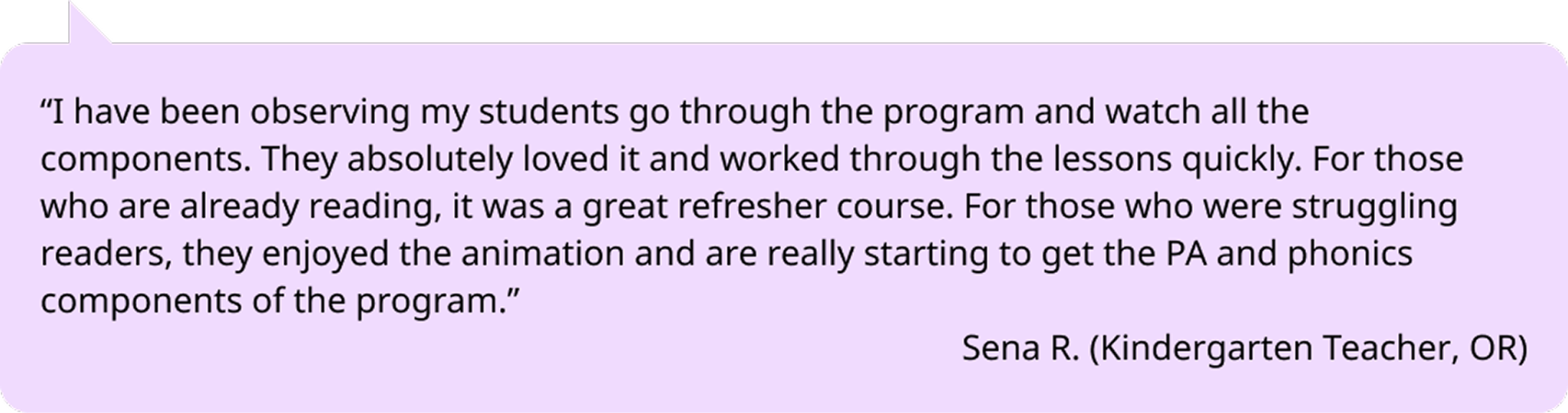
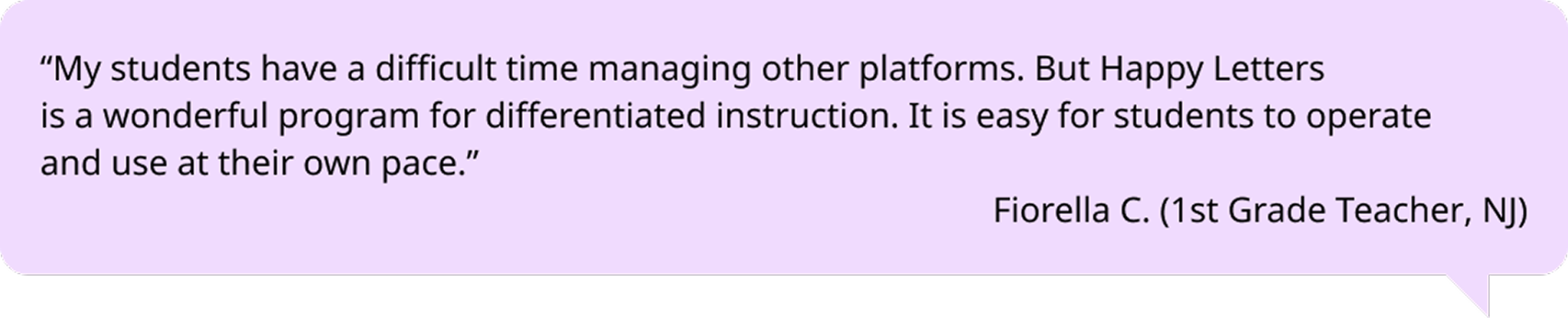
Happy Letters is a purposeful technology station for classrooms, designed for students to be able to work independently: each task provides gentle guidance so students can work through the levels on their own.
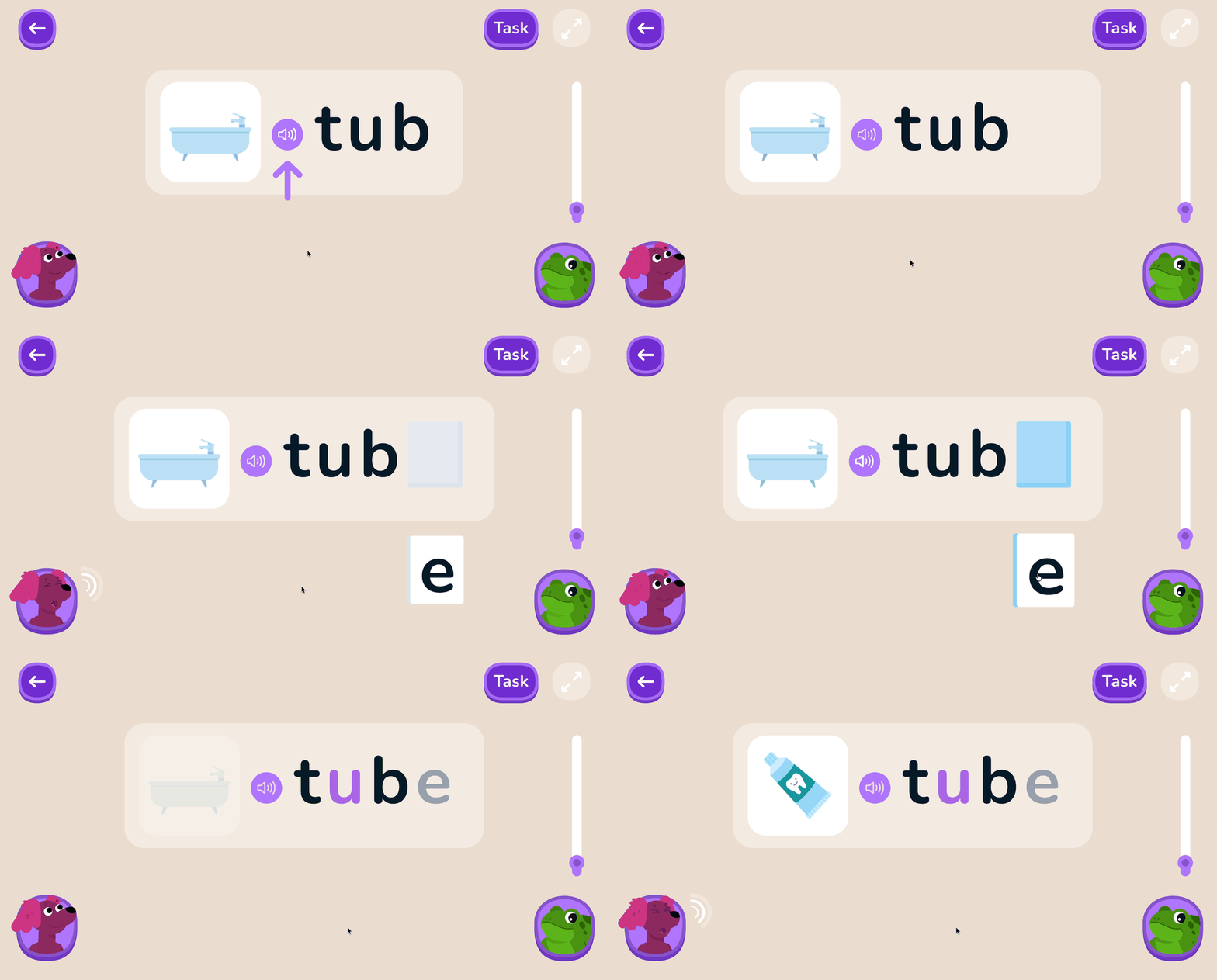
Immediate feedback and flexible scaffolding help them learn at their own pace: those who demonstrate mastery progress faster, and those who need more instruction receive it.
Fun and Engaging
Happy Letters is the perfect blend of learning and fun! Storytelling, friendly characters, and engaging activities maintain students’ interest and help them create vivid mental images, which support memory and recall of the skills they’re learning. Game-like elements motivate students to practice reading without stress.
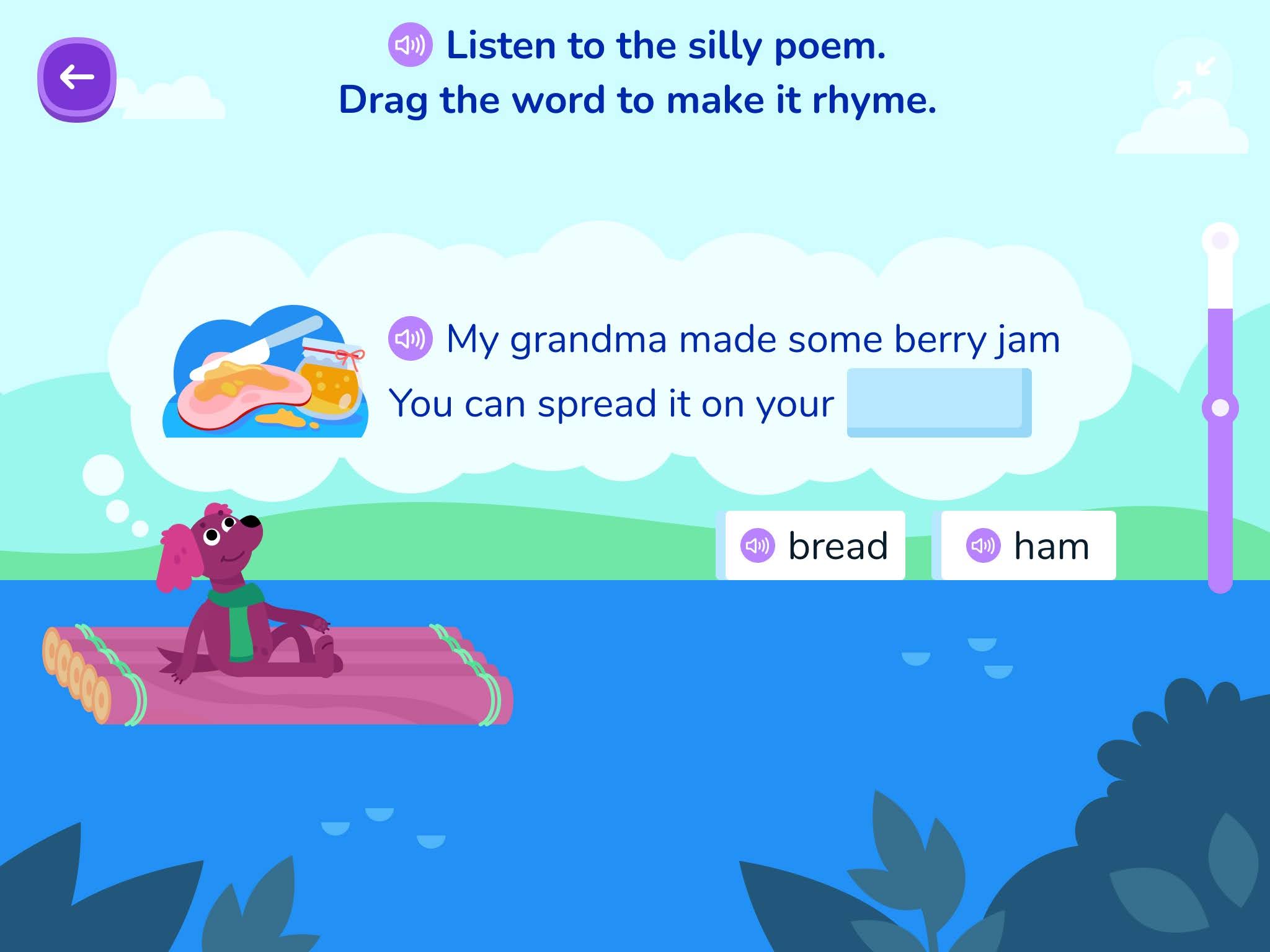
Happy Letters supports students as they grow from pre-readers to confident, fluent readers. With a clear structure, consistent practice, and engaging activities, students build the skills they need to read independently.